
AT A GLANCE
Scope:
Water shut-off in a zonal isolation applicatin with HydraWell´s PWC® method
CLIENT CHALLENGE
The operator, Vermilion Energy, needed a solution that could:
Traditional methods such as section milling or cement squeeze were less suitable due to complexity, risk, and uncertainty in achieving a reliable long-term barrier in this well architecture.
“This operation shows how far jet-based PWC® technology has evolved. Achieving zonal isolation in a 4-1/2” casing demonstrates the flexibility of HydraCT™ and opens the door to solving integrity challenges in wells previously considered too constrained.”
- Erlend Engelsgjerd, CCO HydraWell
BACKGROUND
A mature gas well, onshore in the Netherlands was producing water, ranging from 100 - 200 m³/day. The water production was a consequence of insufficient cement coverage from the primary cementing job behind the 4-1/2” casing in an 8-1/2” hole, allowing communication with a lower water-bearing reservoir zone.
With production efficiency below par and the well’s future value at risk, leaving it in its current state was no longer viable.
HYDRAWELL SOLUTION
A jet-based Perforate, Wash, and Cement (PWC®) operation was selected using the HydraCT™ rigless perf wash cement system.
Although originally designed for coiled tubing deployment, the HydraCT™ tool can also be run using drillpipe, demonstrating its operational flexibility. The tool uses a self-propelled, flow-activated jetting head with a viscous brake controlling downhole RPM. This made HydraCT™ the ideal solution suitable for the well conditions, where no rotation of the workstring was required.
HydraCT™ offered:
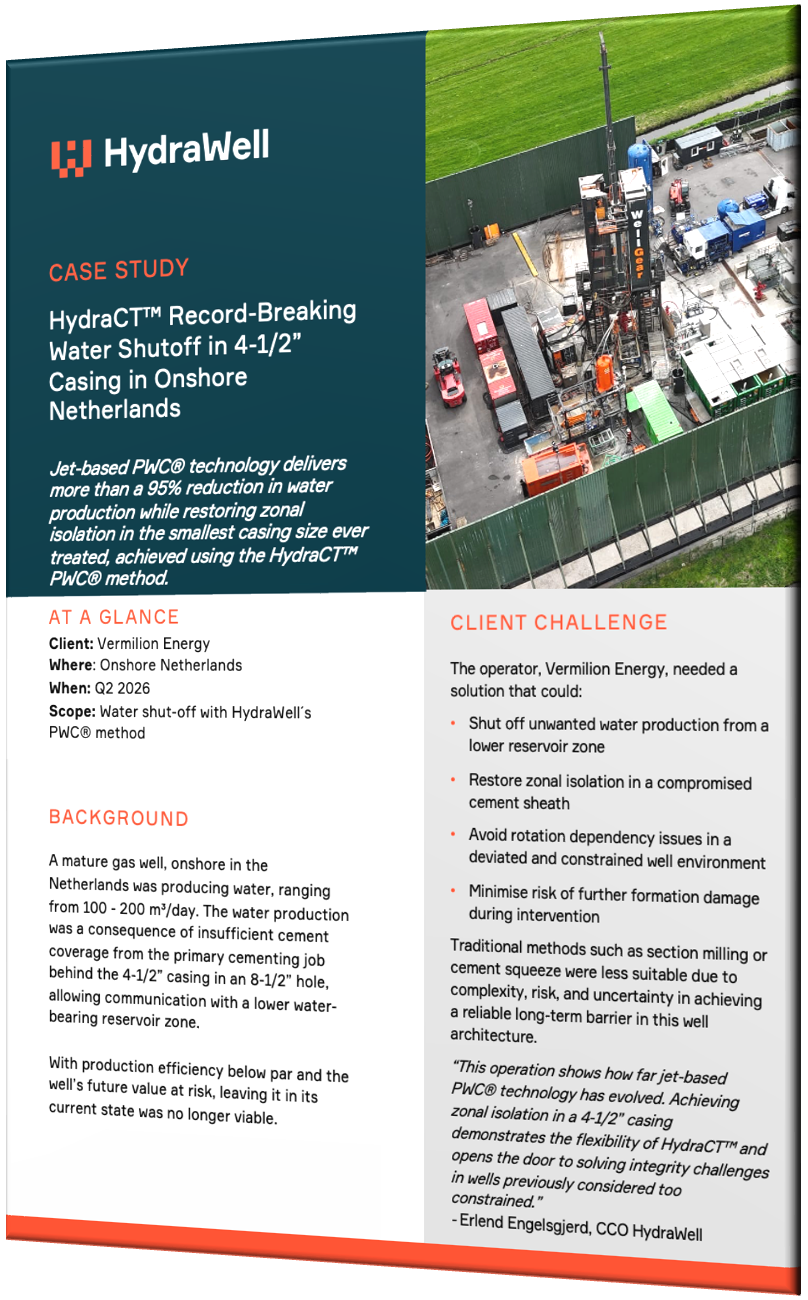
The operation followed the standard PWC® sequence in the smallest casing size ever in a PWC® application, and the first onshore deployment of this nature for the operator.
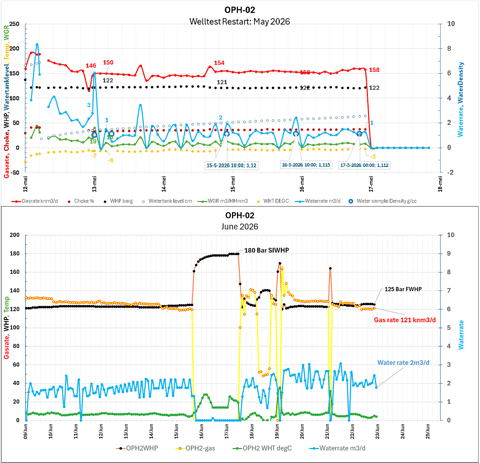
The operation was executed successfully across all phases, achieving full zonal isolation. Post-job monitoring confirmed a significant reduction in water production:
Key outcomes
The intervention also reinforced the value of PWC® as a method not only for plug and abandonment applications, but for restoring well integrity in producing wells by repairing original cement sheath failure.